Klimaatoptimist Arnout Jaspers spreekt
Volgende week woensdag 4 september is hij een avond lang onze gast, maar wij zochten hem alvast op,
Jaspers schreef na de bestseller De stikstoffuik het boek De klimaatoptimist. Daarin legt hij uit dat we geen reden hebben om in paniek te raken over klimaatverandering.
Clintel Foundation
Datum: 29 augustus 2024
Maybe a title
Voorbeeld: However, some people are so concerned about the ways to push climate change and CO₂ reduction that they are going out of their minds, according to Lindzen. “They’re showing this temperature graph. And I think they’re realizing people are saying, you know, you draw it like this (going sharply up – HS), but this is one degree. That’s not much. And they’re worried: this is not getting people worried enough. So they’re saying: well, showing them a flood, showing them a storm, that would be visually convincing,” he says. And as it happens, there are always places on Earth that suffer from extreme weather in a way that occurs only once in a hundred years. “And people don’t figure it out that a once in a hundred years event is occurring some place on Earth every month, or five places every month. You have a picture of that. You now put that on television and you can associate ‘climate change’ with something dramatic,” Lindzen says. “The fact that they had to go to that to convince people suggests it was a fake issue because they’re clearly using something that would be normally called false advertising,” he adds.
Maybe a title
Voorbeeld: However, some people are so concerned about the ways to push climate change and CO₂ reduction that they are going out of their minds, according to Lindzen. “They’re showing this temperature graph. And I think they’re realizing people are saying, you know, you draw it like this (going sharply up – HS), but this is one degree. That’s not much. And they’re worried: this is not getting people worried enough. So they’re saying: well, showing them a flood, showing them a storm, that would be visually convincing,” he says. And as it happens, there are always places on Earth that suffer from extreme weather in a way that occurs only once in a hundred years. “And people don’t figure it out that a once in a hundred years event is occurring some place on Earth every month, or five places every month. You have a picture of that. You now put that on television and you can associate ‘climate change’ with something dramatic,” Lindzen says. “The fact that they had to go to that to convince people suggests it was a fake issue because they’re clearly using something that would be normally called false advertising,” he adds.
Voorbeeldtekst: However, some people are so concerned about the ways to push climate change and CO₂ reduction that they are going out of their minds, according to Lindzen. “They’re showing this temperature graph. And I think they’re realizing people are saying, you know, you draw it like this (going sharply up – HS), but this is one degree. That’s not much. And they’re worried: this is not getting people worried enough. So they’re saying: well, showing them a flood, showing them a storm, that would be visually convincing,” he says. And as it happens, there are always places on Earth that suffer from extreme weather in a way that occurs only once in a hundred years. “And people don’t figure it out that a once in a hundred years event is occurring some place on Earth every month, or five places every month. You have a picture of that. You now put that on television and you can associate ‘climate change’ with something dramatic,” Lindzen says. “The fact that they had to go to that to convince people suggests it was a fake issue because they’re clearly using something that would be normally called false advertising,” he adds.
meer nieuws
Klimaatstreepjescode KNMI is institutionele bangmakerij
Waar in dit nieuwe jaar niets aan zal veranderen, is het deugdrammen van de klimaatalarmisten. Integendeel, als we de tijdgeest goed inschatten, moet het eerst nog erger worden voor het weer beter wordt.
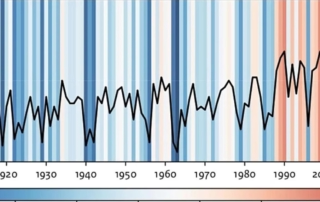
Kleuterstatistiek
De bangmakerij met de keurstreepjescode van het KNMI.
Kerstessay Clintel: Op weg naar het klimaatneutrale kerstdiner in 2050
Kerstessay Clintel: Op weg naar het klimaatneutrale kerstdiner in 2050 U bent vandaag mogelijk bezig met de voorbereidingen voor het kerstdiner 2024. Wordt het vlees of vis of … vegetarisch? Als het aan de overheid ligt wordt het in de toekomst voornamelijk vegetarisch, of sprinkhanenburger, of kunstvlees, of hybride vlees. Journalist, bioloog, [...]